
Growing & using White Sage
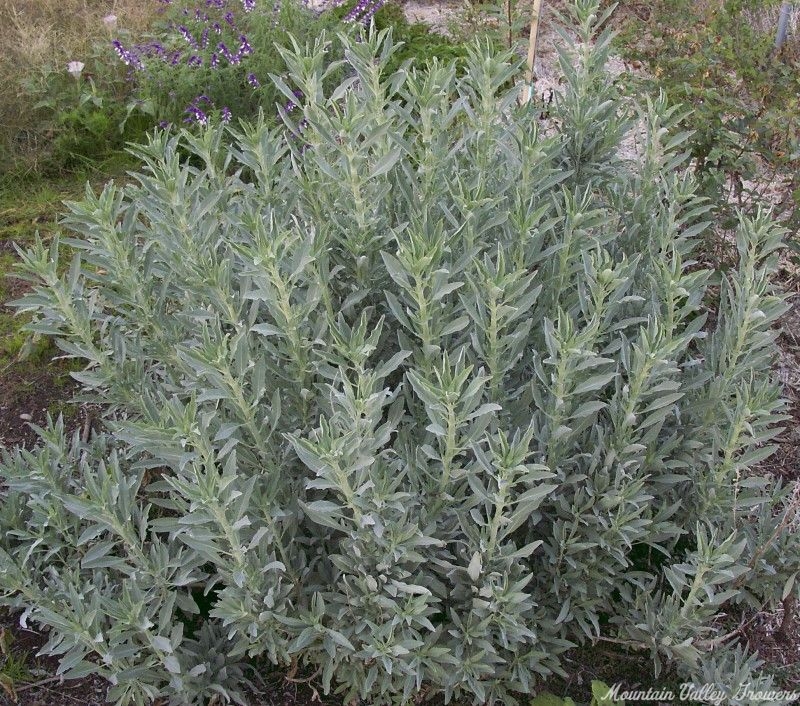
This three year old Salvia apiana is glowing in spring.
White Sage can be a slow growing, difficult to establish plant that can take up to three years to reach a mature size. One White Sage plant can grow two to three feet tall and have a spread of eight feet or more. Native to the Southwest, White Sage likes dry conditions, especially in the winter. Over winter, whole stems may turn black and die if the ground becomes too saturated. If the condition is prolonged, the whole plant may die. In its native Southwest it is hard to water White Sage too much in the summer. But, in other areas, where summer humidity plays a part, White Sage may be impossible to grow successfully. Growing it in a large container may help with high levels of humidity.
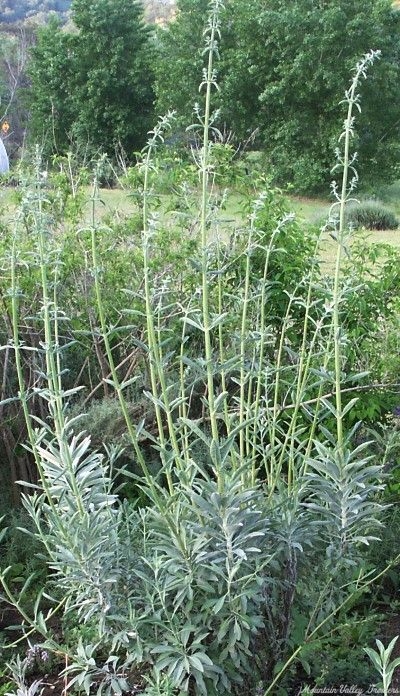
White Sage flower wands will add two to five feet to the height and will have tiny insignificant looking white flowers that are dotted with lavender. At least they are insignificant to us, to the bees they are heaven, which it is why White Sage is sometimes referred to as bee sage.
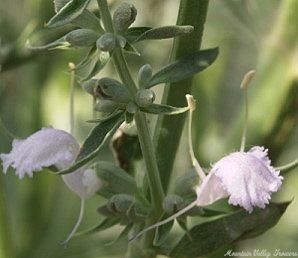
During the blooming season, late April to early June, the bees flock to the plant and provide quite a symphony for the garden.
The stems are hollow and break quite easily so the White Sage should be placed away from areas where it might be bumped or have the hose dragged across it accidentally.
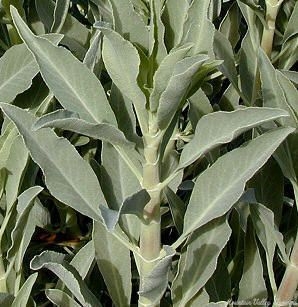
White Sage has highly aromatic, waxy gray leaves that are used for incense.
For Western or Southwestern gardeners, White Sage makes a great addition to our Zone 8-11 Fragrant Herb Garden.